
Growth is Exciting, But is Your Governance Keeping Up?
More customers, expanding teams, stronger revenue, and new opportunities are all exciting milestones for any company. But while growth creates momentum, it can also expose weaknesses that were easier to manage when the business was smaller.
Many SMEs and growing companies focus heavily on sales, operations, and expansion, but governance is often overlooked until problems begin to surface. What once worked through informal communication, founder-led approvals, or ad-hoc decision-making may no longer be sustainable as the business becomes more complex.
This is where business governance becomes increasingly important.
Governance is not just about compliance or corporate paperwork. It plays a practical role in helping businesses scale sustainably, improve accountability, manage risks, and make clearer decisions as operations grow.
In this article, we break down common governance gaps growing businesses face, why they matter, and how companies can strengthen governance without creating unnecessary bureaucracy.
What Does Governance Actually Mean for Growing Businesses?
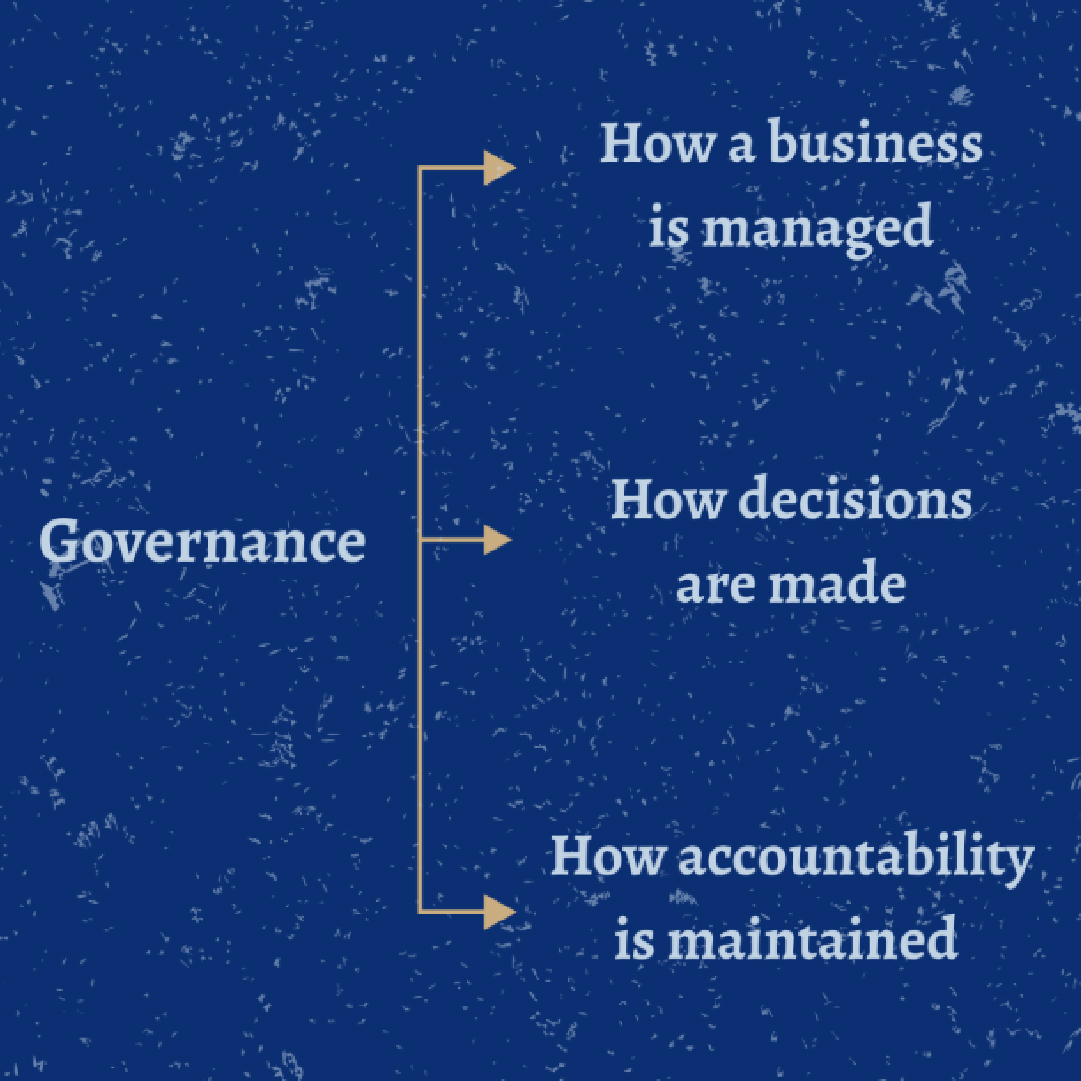
In reality, governance simply refers to how a business is managed, how decisions are made, and how accountability is maintained across the organisation.
For growing businesses, governance can include:
- Clear reporting lines and responsibilities
- Defined approval and decision-making processes
- Financial oversight and spending controls
- Risk identification and management
- Proper documentation and record-keeping
- Internal communication structures
- Compliance monitoring
For example, founders may already approve major expenses, team leaders may oversee operational decisions, and employees may follow unwritten processes that “everyone knows”.
The real question is:
Are these processes clearly communicated, properly documented, and consistently followed?
As businesses grow, relying purely on verbal instructions or founder memory becomes increasingly difficult. Teams expand, departments evolve, and more people become involved in day-to-day operations. Without proper governance structures, confusion and inconsistency can quickly develop
Good SME governance creates clarity. It helps everyone understand who is responsible for what, how decisions should be made, and how risks should be handled as the company scales.
Growth Exposes Governance Gaps, Not Creates Them
As businesses grow, maintaining consistency across teams, decision-making, and internal processes becomes more challenging.
This is often when governance gaps begin to surface more clearly.
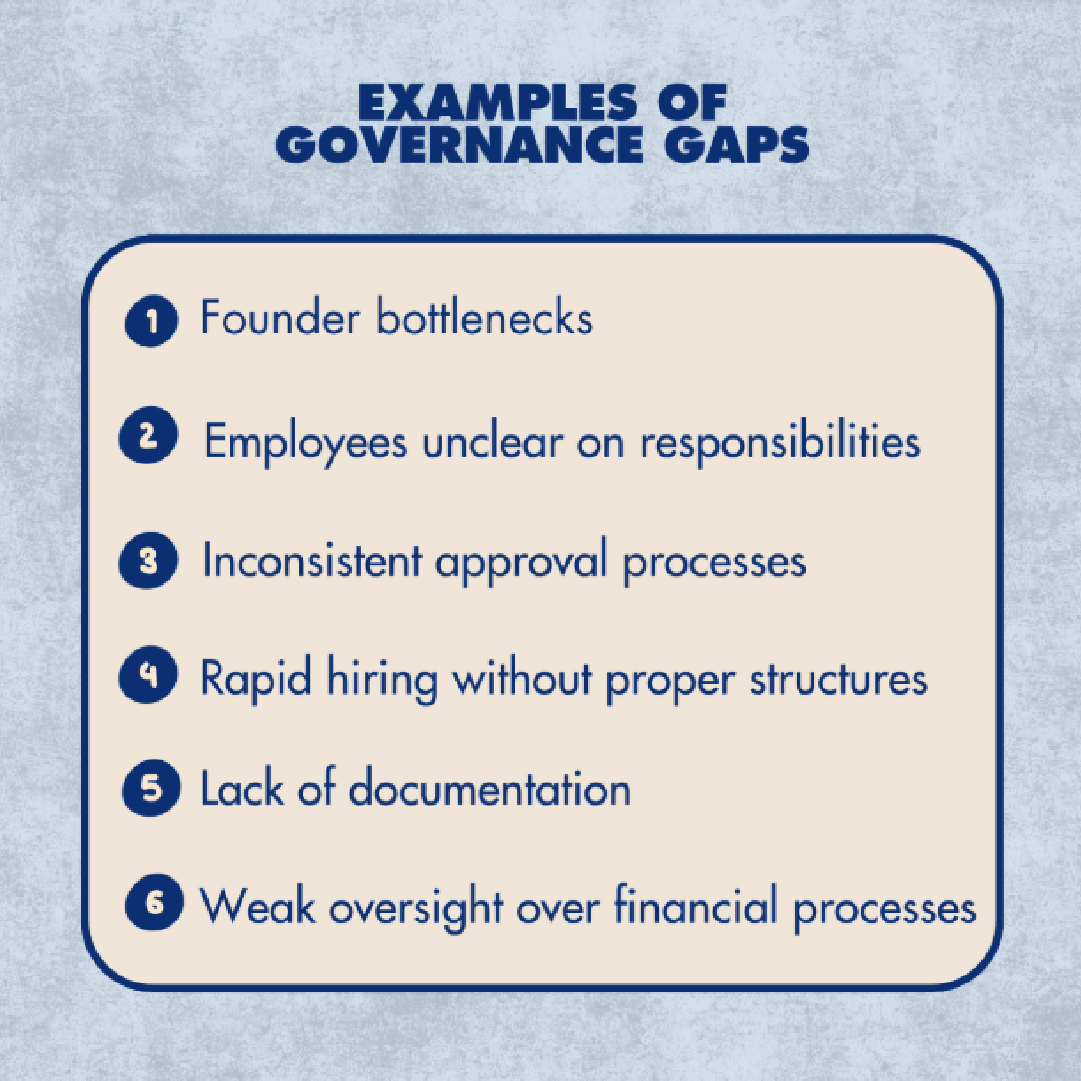
Common examples include:
- Founder bottlenecks slowing approvals and decision-making
- Employees unclear about responsibilities or reporting lines
- Inconsistent approval processes across departments
- Rapid hiring without proper internal structures
- Lack of documentation for operational decisions
- Weak oversight over financial or operational processes
Growth itself does not create governance problems.
Instead, it exposes weaknesses in structures that may not have been noticeable when the business was operating at a smaller scale.
A company with five employees may function efficiently through informal communication. But when the business grows to fifty employees across multiple functions, the same approach may create delays, confusion, and operational inefficiencies.
This is why many growing businesses begin reviewing their governance structures, reporting lines, SOPs, and operational processes as part of scaling sustainably.
Governance advisory support can also help businesses identify gaps early before they become larger operational or compliance risks.
The Real Cost of Governance Gaps to Your Business
Some of the most common impact are:
1. Delayed or Inconsistent Decision-Making
2. Accountability Disputes
3. Financial Leakages and Unauthorised Spending
4. Compliance and Contractual Risks
5. Reduced Investor and Stakeholder Confidence
The impact of governance gaps extends beyond internal operations. It can directly affect business stability, stakeholder confidence, and a company’s ability to scale effectively.
Good Governance Does Not Mean Adding More Layers
In reality, effective governance often starts with simple and practical structures.
Here are some governance best practices growing companies can implement:
1. Clear Delegation and Approval Limits
2. Basic SOPs and Documentation Practices
3. Defined Reporting Structures
4. Regular Management Reviews
5. Consistent Practice of Internal Communications
Good governance is not about adding unnecessary layers of process. It is about creating enough structure for businesses to operate more transparently, consistently, and sustainably as they grow.
Governance Should Grow Alongside Your Business
Growth creates opportunity, but it also increases complexity.
The earlier businesses strengthen governance structures, the easier it becomes to scale with greater clarity, accountability, and operational stability.
Good governance is not about slowing businesses down. It is about creating sustainable structures that support long-term growth while reducing operational and compliance risks.
If navigating governance, internal structures, compliance requirements, or operational risks feels overwhelming as your business grows, Harmoni Advisory is here to help you navigate it with clarity and confidence.
We support growing businesses with governance advisory, SOP development, compliance support, operational process reviews, and internal structure assessments designed to strengthen governance without creating unnecessary complexity.
Planning for growth? Connect with us today and let’s help your business scale with stronger foundations for the future.