
Client Onboarding Checklist for SMEs: 5 Documents You Need Before Starting Work
A structured client onboarding process starts with the right documentation. Here's a simple client onboarding checklist that covers five essential documents that can help SMEs set expectations clearly, reduce misunderstandings, and deliver projects more smoothly.
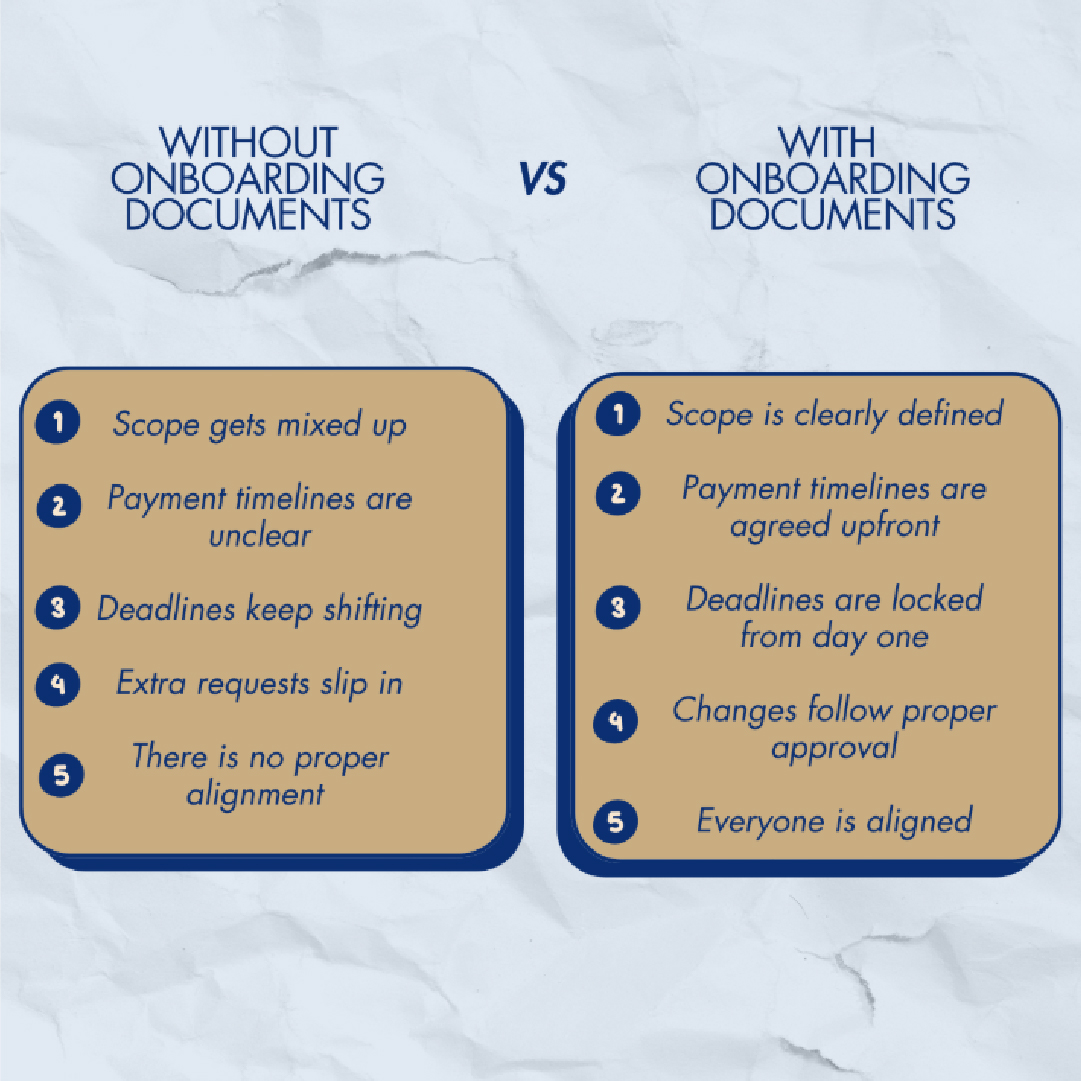
More often than not, these issues stem from expectations that were never clearly documented in the first place.
Having a few essential client documents before work starts helps set expectations early, reduce misunderstandings, and create a smoother working relationship for everyone involved.
Quick Client Onboarding Checklist for SMEs
Document | Why It Matters |
|---|---|
Quotation or Proposal | Aligns expectations from the start |
Scope of Work | Prevents extra work being added later |
Payment Terms | Supports healthy cash flow |
Service Agreement | Clarifies how both parties work together |
NDA (if needed) | Protects sensitive information |
A Quotation or Proposal: The Starting Point for Every Project
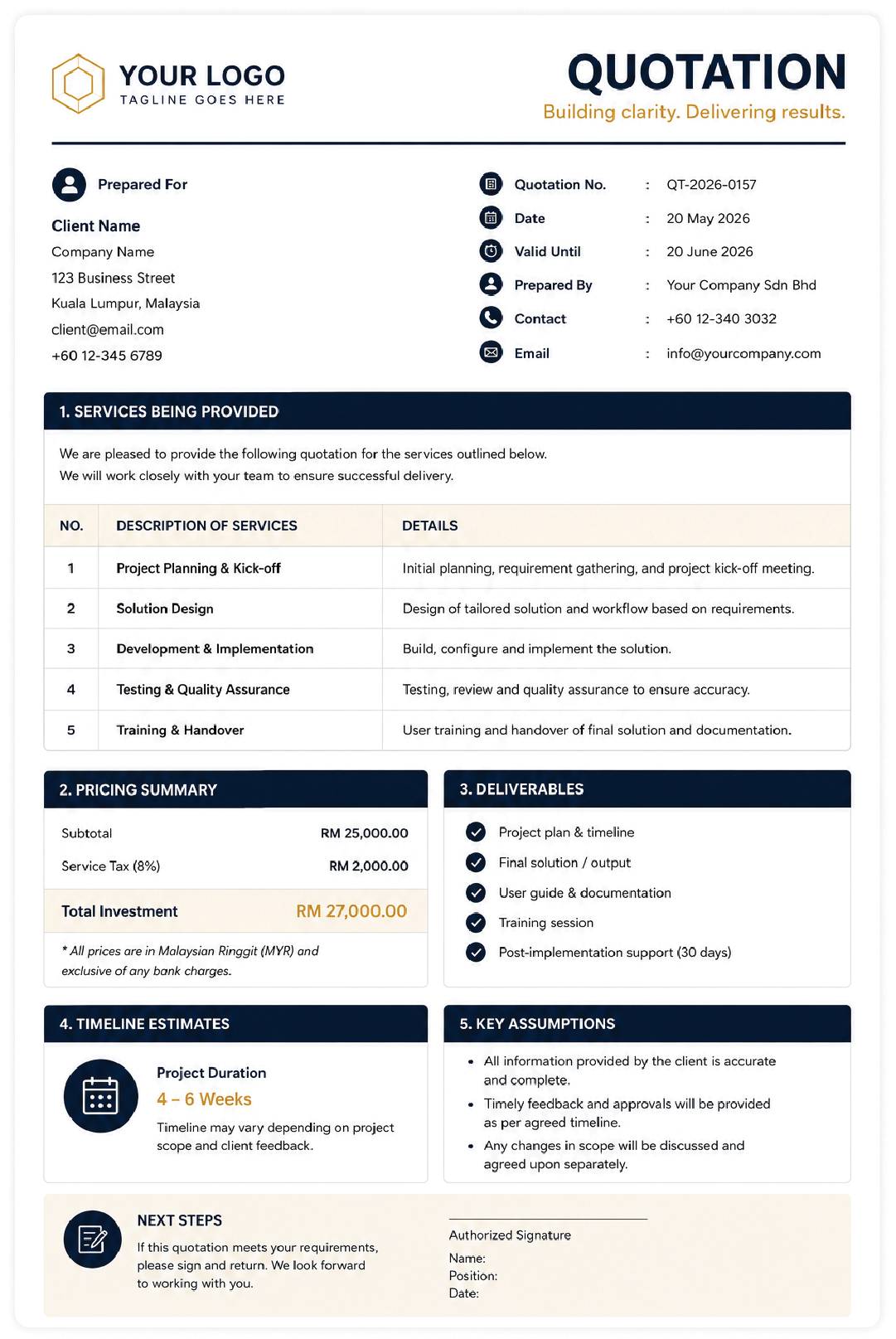
Think of your quotation or proposal as the first version of the agreement between you and your client.
It doesn’t need to be lengthy, but it should clearly explain what you’re providing, what it costs, and what the client can expect.
A good quotation typically includes:
- Services being provided
- Pricing
- Deliverables
- Timeline estimates
- Key assumptions
Problems often arise when both parties believe they agreed on the same scope of work, only to discover later that they had different expectations of the project.
Here's what a clear quotation should look like:
A Scope of Work: Preventing Extra Work Being Added Later
“Can we just add one more thing?”
Then you’re probably dealing with work that wasn’t part of the original agreement.
And to be fair, this usually doesn’t start as a big issue. Clients asking for a few small changes is normal in most projects.
The real challenge happens when there’s no clear record of what was originally agreed in the first place. That’s when things start to get messy.
- What will be delivered
- Who is responsible for what
- Key project milestones
- Expected timelines
- What is not included
When these basics are written down early, everyone starts from the same understanding.
One of the fastest ways SMEs lose profitability is by continuously taking on extra work that was never part of the original agreement.
Payment Terms: Setting Clear Payment Expectations
They struggle because cash doesn’t arrive when it’s expected.
While payment terms are often included in your quotation or service agreement, they deserve special attention.
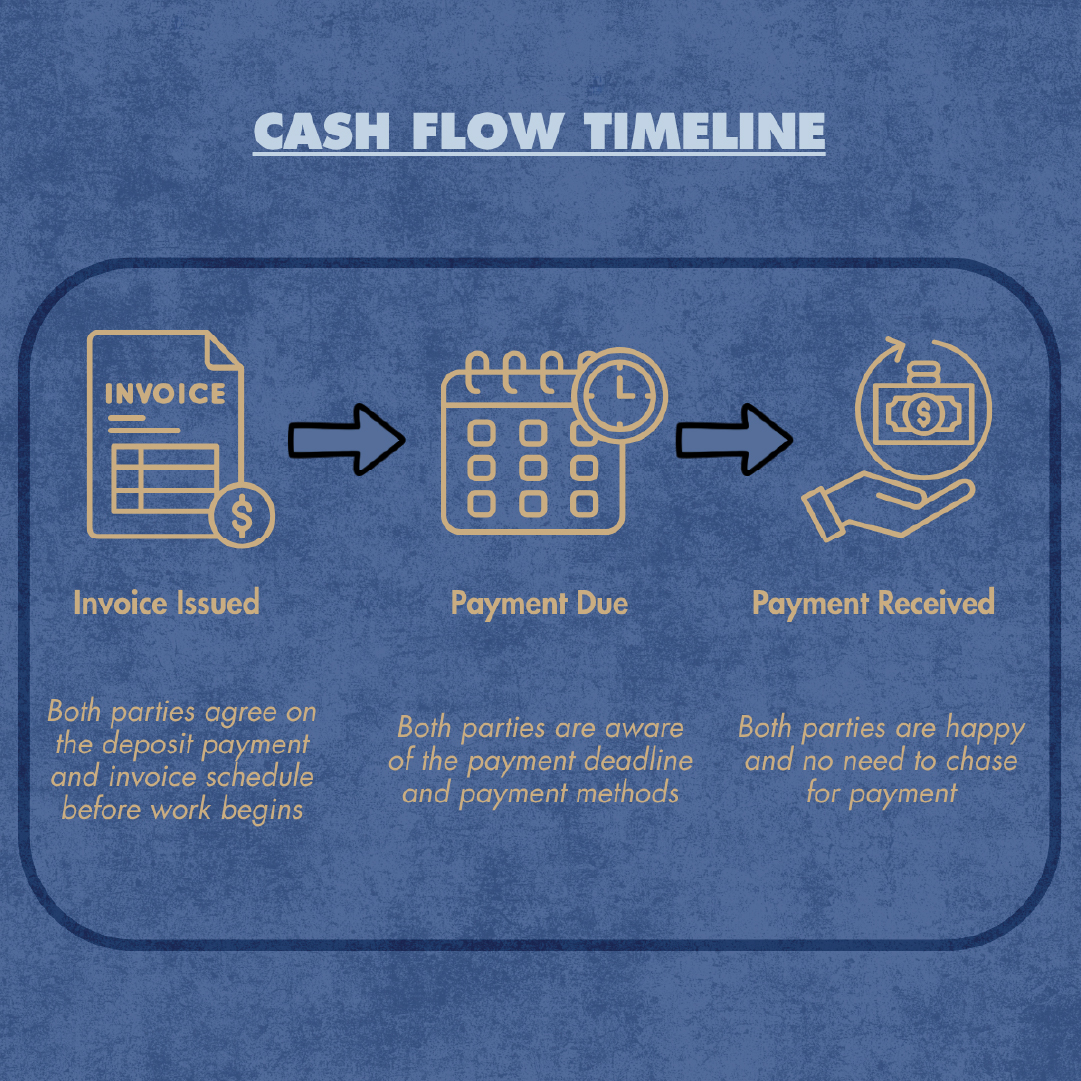
Before any work starts, both parties should understand :
- Whether a deposit is required
- When invoices will be issued
- Payment deadlines
- Accepted payment methods
- Any milestone-based payments
It may feel uncomfortable discussing money upfront, but it’s far easier than chasing payments after the work has already been completed.
Clear payment expectations create confidence for both sides and help avoid awkward conversations later.
A Service Agreement: Setting the Ground Rules
A service agreement provides a broader framework for how the engagement will work. Think of it as the operating manual for the client relationship.
A proper service agreement should outline:
- Roles and responsibilities
- Communication channels
- Project duration
- Approval processes
- General working arrangements
Having these details documented helps ensure both parties understand how the relationship will operate from the outset. It also provides a clear reference point whenever questions or misunderstandings arise during the project.
An NDA: Protecting Confidential Information (When Needed)
This is particularly common for businesses involved in:
- Marketing and branding projects
- Business strategy or consultancy work
- Product development
- Technology and software development
- Partnerships and collaborations
An NDA helps establish expectations around confidentiality before information is exchanged. It can cover matters such as:
- Business strategies
- Marketing plans
- Product ideas
- Customer information
- Financial data
For SMEs working on projects that involve confidential or commercially sensitive information, an NDA can provide greater clarity and help build trust.
Good Documentation Doesn't Slow Projects Down. It Keeps Them Moving.
In reality, the opposite is often true.
A few hours spent documenting expectations at the start can save weeks of clarification, revisions, and difficult conversations later.
As your business grows and takes on more clients, having a consistent onboarding process becomes less of a nice-to-have and more of a necessity.
If taking on more clients is starting to feel harder to manage, the issue may not be the workload itself. It may be the lack of clear processes behind it.